
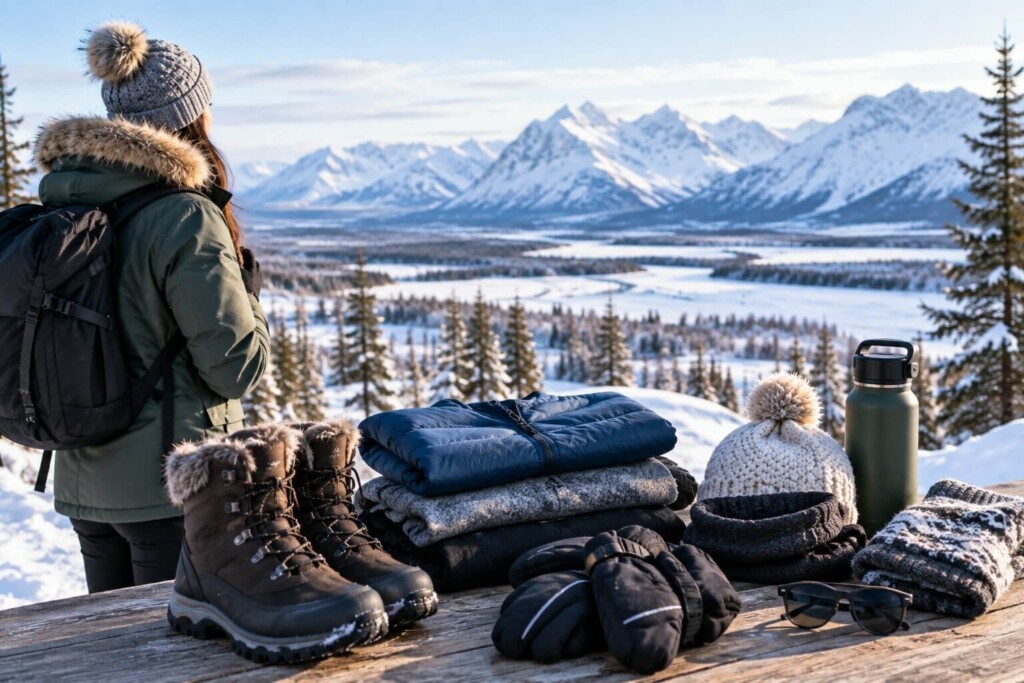

Planning a winter trip to Alaska? Knowing what to wear can make the difference between enjoying the snow-covered scenery and spending your trip trying to stay warm. The key is layering: start with a moisture-wicking base layer, add insulation, and finish with a wind- and weather-resistant outer layer. Warm boots, mittens, a hat, and face protection are also essential for spending time outdoors.
If you’re staying in Palmer, Alaska, this approach is particularly useful. Winter adventures around the Mat-Su Valley can take you from heated indoor spaces to snowy trails, viewpoints and outdoor activities, so clothing that can be adjusted throughout the day is much more practical than relying on one extremely heavy coat.
Why Layering Matters in Alaska During Winter
Alaska winter weather can vary considerably depending on where you are, what you’re doing and how long you’re outside. Instead of wearing one oversized layer, a better approach is to build your outfit around several layers that each serve a purpose.
Layering gives you more control over your comfort. You can remove an insulating layer when you’re indoors or moving around, then put it back on when temperatures drop or you’re standing outside.
This is especially useful when exploring Palmer and the surrounding Mat-Su Valley. A winter day might involve driving, walking around town, enjoying an outdoor attraction and returning to a warm vacation rental between activities.
The basic system is simple:
Base layer → insulating layer → outer layer
Then add appropriate winter accessories, footwear and extra protection depending on the conditions.
What Is the Best Base Layer for an Alaska Winter?
Your base layer sits directly against your skin, so its main job is to manage moisture while helping retain body heat.
Look for:
- Merino wool
- Synthetic moisture-wicking fabrics
- Thermal tops
- Thermal leggings or long underwear
A close-fitting base layer works well because it provides warmth without creating unnecessary bulk.
Avoid relying on cotton as your main base layer for extended outdoor activities. Cotton absorbs moisture and can become cold and uncomfortable when damp.
For particularly cold days, consider a thermal top and bottom rather than simply wearing a regular T-shirt underneath your winter clothes.
What Should You Wear as a Mid Layer?
The middle layer provides insulation. This is where fleece, wool sweaters, down or synthetic insulated jackets can be useful.
Good choices include:
- Fleece jackets
- Fleece pullovers
- Wool sweaters
- Lightweight down jackets
- Synthetic insulated jackets
- Insulated vests
You don’t necessarily need the thickest possible mid layer. Several lighter layers can give you more flexibility than one bulky sweater.
For example, you might wear a thermal base layer with a fleece jacket underneath your winter coat. If you’re heading indoors or becoming too warm while walking, you can remove the fleece without having to completely change your outfit.
What Kind of Winter Coat Do You Need for Alaska?
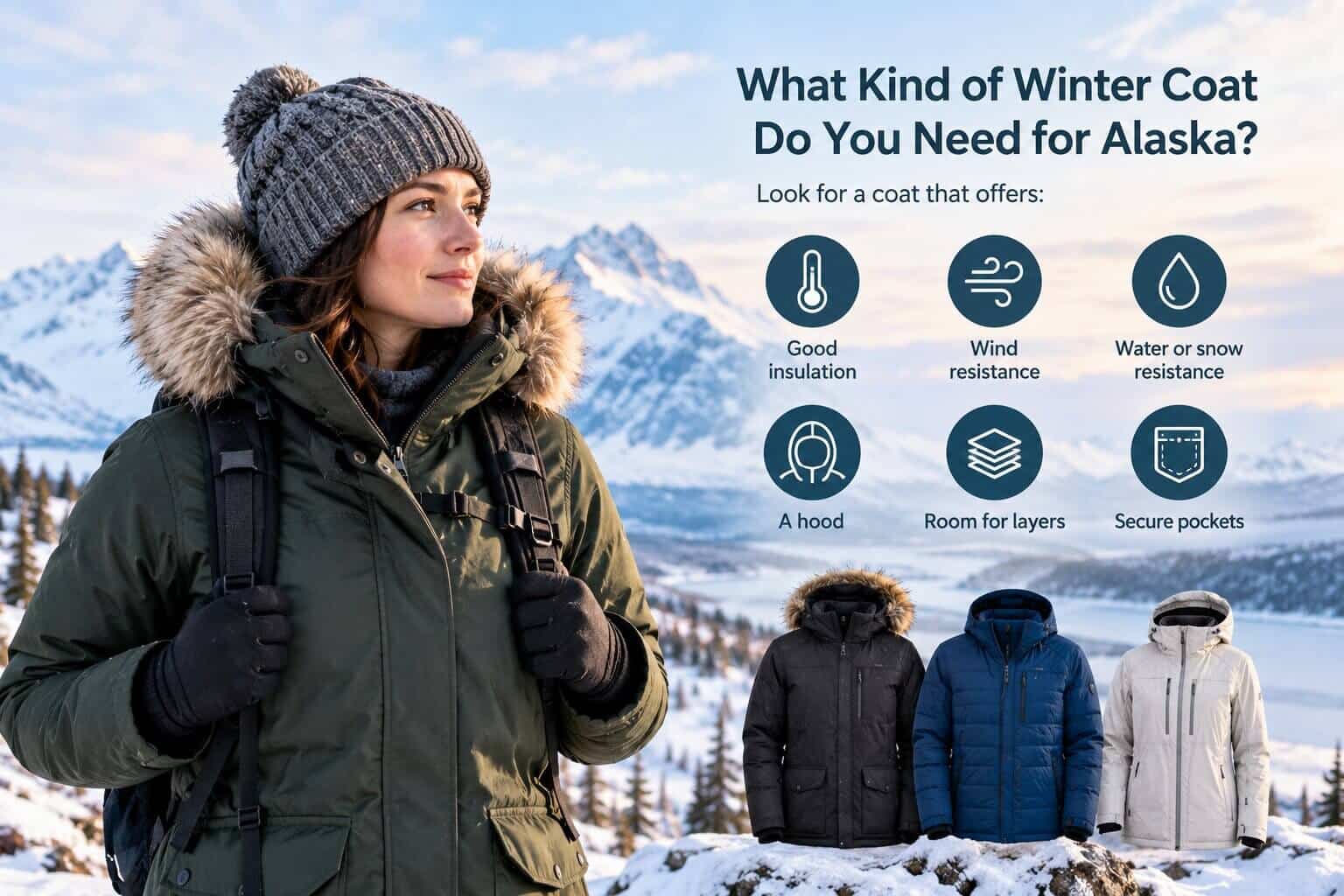
Your outer layer protects you from the elements. For an Alaska winter trip, look for a warm winter coat or parka that provides insulation and protection from wind and snow.
A good winter outer layer should ideally have:
- Good insulation
- Wind resistance
- Water or snow resistance
- A hood
- Enough room for your base and mid layers
- Secure pockets
If you plan to spend extended periods outdoors, a properly insulated parka can be especially valuable.
Remember that your coat is only one part of your winter clothing system. Even the warmest parka cannot compensate for cold feet, exposed hands or inadequate base layers.
What Pants Should You Wear in Alaska in Winter?
Your legs need a layering system too, particularly if you’re going to spend significant time outdoors.
Start with thermal or moisture-wicking long underwear underneath your regular winter pants.
Depending on your activities, you may then want:
- Insulated snow pants
- Waterproof pants
- Ski pants
- Wind-resistant outdoor pants
For casual sightseeing with limited outdoor exposure, thermal leggings underneath regular pants may be enough. If you’re snowshoeing, skiing, sledding or spending long periods outside, additional protection can make a significant difference.
Choose pants that allow enough room for your base layer without restricting movement.
What Are the Best Boots to Wear in Alaska in Winter?
Warm, dry feet are essential.
Winter boots should provide insulation, traction and protection from snow and moisture. Look for boots specifically designed for cold-weather conditions rather than ordinary fashion boots.
Consider:
- Insulated winter boots
- Waterproof construction
- Good traction
- Room for warm socks
- A secure fit around the ankle
- A sole designed for snow and ice
Don’t make the mistake of choosing boots that are too tight. Your feet need enough room for warm socks, and excessive compression can make your feet feel colder.
For winter activities around Palmer and the Mat-Su Valley, appropriate traction is also important because snow and icy surfaces can make ordinary footwear difficult to use safely.
Should You Wear Gloves or Mittens in Alaska?
For serious cold, mittens generally provide better warmth than traditional gloves because your fingers remain together and can share heat.
A useful combination is:
Thin liner gloves + insulated mittens
The liner gloves give you some dexterity when you need to use your phone or camera, while the mittens provide additional insulation when you’re outside.
You should also consider bringing hand warmers as a backup for particularly cold outdoor activities.
If you’re planning to photograph the northern lights, having liner gloves can be especially useful because you may need to operate camera controls without completely exposing your hands.
Don’t Forget Your Head, Neck and Face
A significant amount of discomfort in winter comes from exposed skin rather than your torso.
Your winter packing list should include:
- Warm hat or beanie
- Neck gaiter or buff
- Scarf
- Balaclava
- Hood
- Face covering for very cold conditions
A hat that covers your ears is particularly useful.
A neck gaiter can also be pulled higher over your face when conditions become especially cold or windy. For longer outdoor activities, a balaclava can provide additional protection for your cheeks, nose and chin.
What Socks Should You Pack for Alaska?
Socks deserve more attention than they usually get.
Choose wool or synthetic winter socks rather than cotton. Merino wool is a popular choice because it provides warmth while managing moisture.
You may be tempted to wear several pairs of thick socks, but more isn’t always better. If multiple pairs make your boots too tight, they can restrict circulation and leave your feet colder.
Instead, choose a suitable warm sock and make sure your boots have enough room.
Pack several pairs so you can change into dry socks during longer trips.
Alaska Winter Packing List
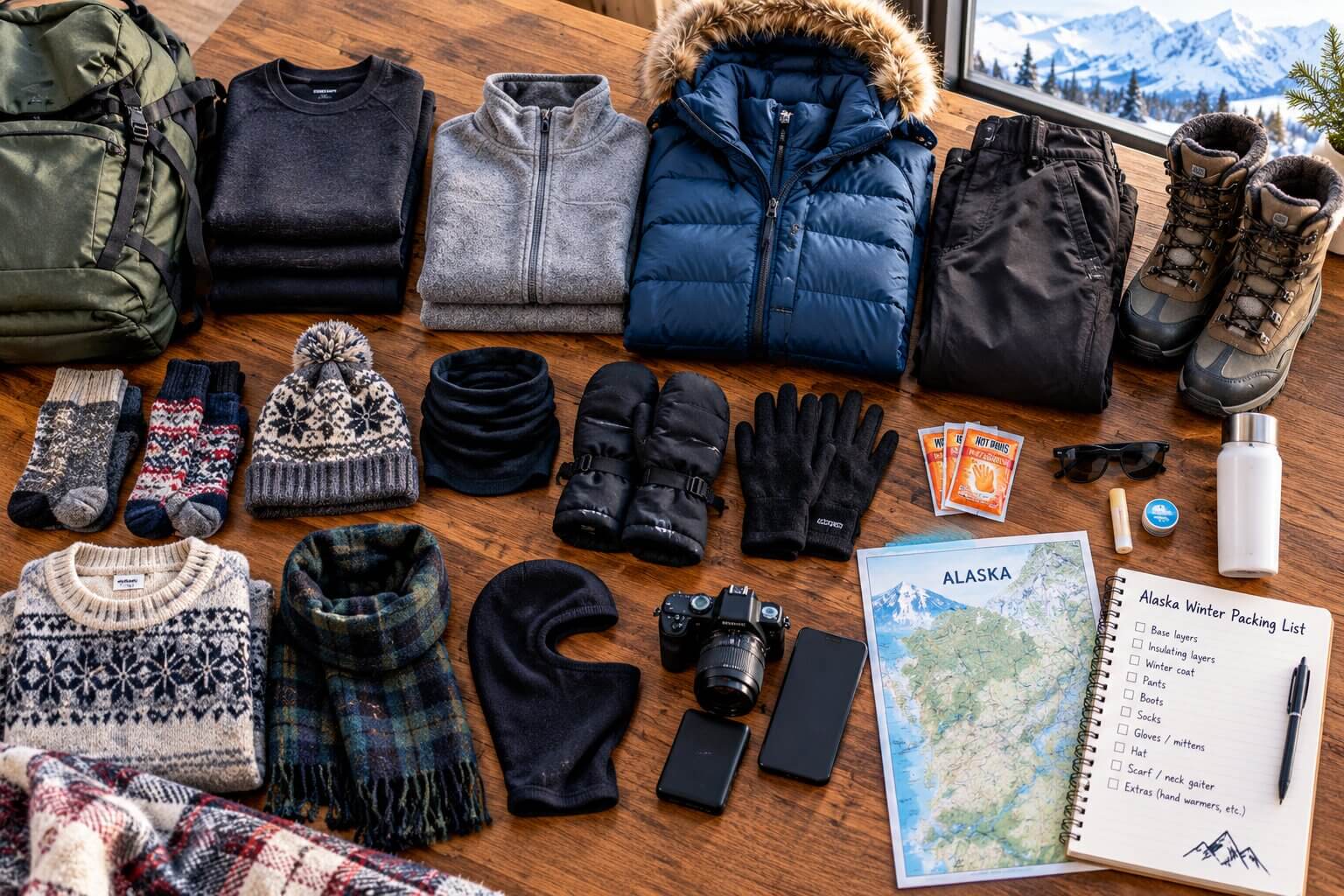
If you’re wondering exactly what to pack, use this checklist as a starting point:
Clothing
- Thermal base-layer top
- Thermal base-layer bottoms
- Fleece jacket or sweater
- Insulated mid layer
- Warm winter parka
- Snow or insulated pants
- Wool or synthetic socks
- Warm hat
- Neck gaiter or scarf
- Balaclava for very cold conditions
Footwear
- Insulated winter boots
- Extra socks
- Optional traction aids for icy conditions
Hand Protection
- Liner gloves
- Insulated mittens
- Hand warmers
Useful Extras
- Sunglasses
- Lip balm
- Moisturizer
- Backpack for carrying extra layers
- Reusable water bottle
- Phone or camera batteries
- Small personal emergency kit
Packing an extra base layer and additional socks is worthwhile if you’re planning several outdoor days.
What Should You Wear for Outdoor Activities Near Palmer?
Your clothing should match your activity.
If you’re taking a short walk around Palmer, you may not need the same amount of insulation as someone spending several hours snowshoeing or skiing.
Around the Palmer area, winter activities can include snowshoeing, cross-country skiing, sledding and other outdoor adventures. Hatcher Pass is also a popular winter destination, with opportunities for skiing, snowshoeing and other snow-based activities.
For active adventures, remember that you can generate considerable body heat while moving. Start with enough protection to stay comfortable, but make sure you have room to adjust your layers.
For activities where you’ll be standing or sitting outside for long periods, bring additional insulation.
What Should You Wear for Seeing the Northern Lights?
Watching the northern lights is very different from taking a quick winter walk.
You may spend a long time standing outside, often during the coldest part of the night. Even if you’re not physically active, you’ll need enough insulation to remain comfortable.
For northern lights viewing, consider:
- Thermal base layers
- Warm fleece or insulated mid layer
- Heavy winter parka
- Insulated pants
- Warm winter boots
- Thick wool socks
- Insulated mittens
- Warm hat
- Neck gaiter or balaclava
- Hand warmers
Bring an extra layer if you have space. You can always remove it if you become too warm, but you cannot easily add a layer you didn’t pack.
How to Dress When Going From Outdoors to Indoors
One of the advantages of a layering system is that it works just as well indoors.
Alaska’s heated buildings can feel very warm compared with outdoor temperatures. Rather than wearing one extremely heavy layer, use several removable layers.
For example:
Outside: thermal top + fleece + parka
Inside: thermal top + fleece
This makes it easier to stay comfortable when you’re moving between your accommodations, restaurants, shops and outdoor activities.
It also makes packing more efficient because the same layers can be combined in different ways throughout your trip.
Staying Warm During a Winter Stay in Palmer
Where you stay can also affect how convenient your winter trip feels.
Quarter 54 in Palmer provides a comfortable base for exploring the area, with fully equipped kitchens, in-suite laundry, high-speed internet, cozy bedrooms and convenient self check-in. Having laundry available can be particularly useful during a winter trip because you’ll likely be packing multiple layers and extra socks.
The suites also provide a comfortable place to warm up between outdoor adventures around Palmer and the wider Mat-Su Valley.
For travelers planning a longer visit, having space to wash and dry clothing can make packing lighter and managing winter gear easier.
Common Alaska Winter Clothing Mistakes to Avoid
Wearing Cotton as Your Main Base Layer
Cotton can hold moisture and become uncomfortable when you’re outside for extended periods. Choose wool or synthetic moisture-wicking materials instead.
Wearing One Huge Coat Without Layers
A single heavy coat doesn’t give you the same flexibility as a proper layering system. Multiple layers allow you to adjust your clothing as your activity and surroundings change.
Forgetting Your Feet
A warm jacket won’t help much if your feet are cold. Invest in suitable winter boots and bring enough warm socks.
Wearing Regular Fashion Gloves
Thin gloves may work for quick trips between a car and a building, but they’re not ideal for extended time outside in winter conditions.
Not Protecting Your Face
Your ears, cheeks and nose can become uncomfortable quickly in cold and wind. Keep a warm hat and face covering accessible.
Packing Too Little
Winter clothing takes up more luggage space, but it’s better to have an extra warm layer than to discover you need one after arriving.
Final Alaska Winter Layering Checklist
Before leaving for your trip, check that you have:
- A moisture-wicking base layer
- A warm insulating layer
- A weather-resistant winter coat
- Thermal bottoms
- Snow or insulated pants if needed
- Insulated winter boots
- Warm wool or synthetic socks
- Insulated mittens
- Liner gloves
- A hat covering your ears
- A neck gaiter or scarf
- Face protection
- Extra socks and base layers
- Hand warmers
- Clothing appropriate for your planned activities
The most important thing to remember is that there isn’t one perfect Alaska winter outfit. Your ideal clothing combination depends on the temperature, wind, precipitation, activity level and how long you’ll be outside.
For a winter trip to Palmer, layering gives you the flexibility to experience Alaska outdoors while still being able to return to a warm and comfortable place to relax. Pack smart, keep your extremities protected, and build your outfit around layers you can add or remove throughout the day.
