
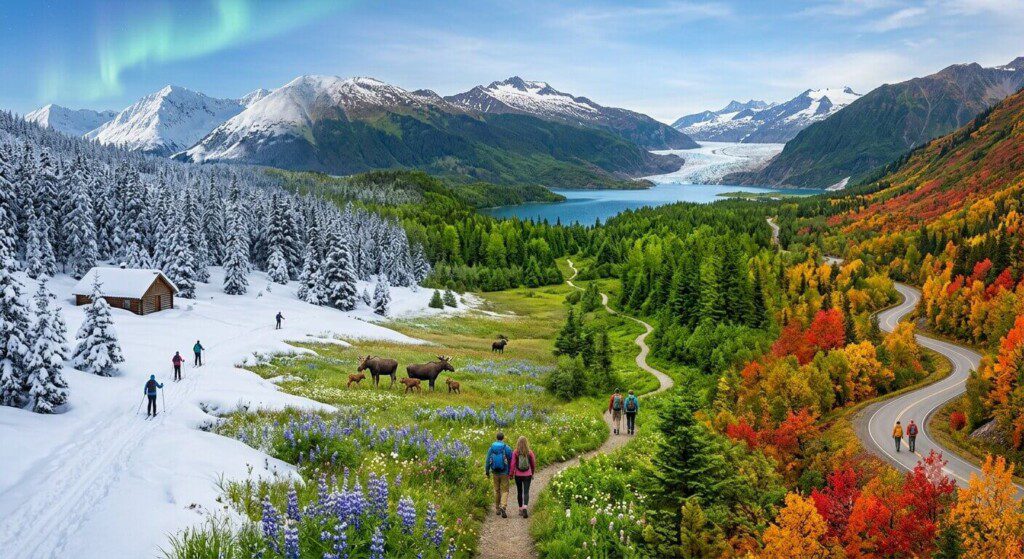

If you’re planning a trip to Southcentral Alaska, choosing the right time of year can make a big difference to your experience. The best time to visit Palmer depends largely on what you want to do. Do you want long days for hiking and sightseeing? Snow-covered landscapes and winter adventures? Fall colors and the possibility of seeing the Northern Lights?
Located in the scenic Matanuska-Susitna Valley, Palmer offers a different experience in every season. The surrounding mountains, trails, glaciers, farms, wildlife areas, and nearby outdoor attractions make it an excellent base for exploring Alaska.
While summer is often considered the best time to visit Alaska for first-time travelers, Palmer is a year-round destination. Each season has something unique to offer, from nearly endless summer daylight to snowy winter adventures and spectacular fall colors.
Here is a season-by-season breakdown to help you decide the best time to visit Palmer for your Alaska vacation.
Quick Answer: What Is the Best Time to Visit Palmer?
For most travelers, June through August is the best time to visit Palmer, Alaska. Summer offers the longest daylight hours, generally the most comfortable conditions for hiking and sightseeing, and excellent access to outdoor attractions throughout the Matanuska-Susitna Valley.
However, the best time depends on your travel goals:
- Best for hiking and outdoor sightseeing: June through August
- Best for warm weather and long daylight: July
- Best for fall colors: Late August through September
- Best for Northern Lights: Late August through early April
- Best for snow activities: December through March
- Best for fewer crowds: May and September
- Best for a combination of fall scenery and aurora viewing: September
Palmer’s daylight changes dramatically throughout the year. Around the summer solstice, Palmer can have approximately 19 hours of daylight, while the shortest winter days have only around five and a half hours of daylight.
Summer in Palmer: June Through August
Summer is generally the best time to visit Palmer for outdoor adventures, sightseeing, and exploring the wider Alaska landscape.
Long days give visitors plenty of time to explore. You can hike in the morning, visit a glacier in the afternoon, enjoy a local meal, and still have hours of daylight left for an evening drive or outdoor activity.
Palmer and the surrounding Matanuska-Susitna Valley offer easy access to mountains, rivers, wildlife areas, scenic drives, and outdoor attractions. Nearby highlights include Hatcher Pass, Knik Glacier, Matanuska Peak, Pioneer Peak, and the Matanuska Glacier.
June: Long Days and Outdoor Adventures
June is one of the most appealing months for visitors who want to make the most of Alaska’s long daylight hours. The days are exceptionally long, allowing you to fit more into your itinerary.
This is a great time for:
- Hiking and nature walks
- Scenic drives
- Glacier tours
- Wildlife viewing
- Rafting and other outdoor adventures
- Exploring Palmer’s local attractions
- Visiting farms, markets, and outdoor events
June can be an excellent choice for travelers who want the classic Alaska summer experience without waiting until the heart of peak season.
July: Warm Weather and Peak Summer
July is often one of the most popular times to visit Alaska. For many visitors, it offers the best combination of comfortable temperatures, long daylight hours, and access to outdoor activities.
Palmer is particularly attractive during the summer because the town combines a small-community atmosphere with easy access to some of Southcentral Alaska’s most impressive landscapes.
This is a good time to plan:
- Longer hiking trips
- Day trips through the Matanuska-Susitna Valley
- Glacier experiences
- Scenic mountain drives
- Wildlife excursions
- Outdoor markets and local events
The main disadvantage of July is that it is a popular travel month. Accommodation and popular activities can be in higher demand, so booking ahead is a good idea if you plan to visit during peak summer.
August: Late Summer Scenery
August is another excellent month for exploring Palmer. The days remain long, although daylight gradually begins to decrease compared with June and July.
Late summer can also bring the first signs of the changing season. Depending on the year and location, visitors may begin to see autumn colors developing toward the end of the month.
August is ideal for travelers who want:
- Summer hiking
- Outdoor sightseeing
- Scenic photography
- Wildlife experiences
- A slightly more seasonal atmosphere
- The possibility of early Northern Lights viewing later in the month
The Northern Lights season generally becomes possible from late August as nights become dark enough to see the aurora.
Short description: Summer offers Palmer’s best conditions for hiking, sightseeing, glaciers, and making the most of Alaska’s extraordinary daylight.
Fall in Palmer: September Through October
Fall can be one of the best times to visit Palmer if you want colorful scenery, fewer visitors, and a chance to combine autumn landscapes with Northern Lights viewing.
September is particularly appealing because it sits between the busy summer season and the deeper winter months. The days become noticeably shorter, but there is still enough daylight for sightseeing and outdoor activities.
The changing landscape can be spectacular. Mountains, forests, and valleys take on rich autumn colors, creating excellent opportunities for photography and scenic drives.
September: Fall Colors and Northern Lights
September is arguably one of the most versatile months to visit Palmer.
You may be able to enjoy:
- Fall foliage
- Hiking in cooler conditions
- Scenic drives
- Quieter attractions
- Darker skies for aurora viewing
The Northern Lights season runs broadly from late August through early April, with the darkest months generally providing the greatest opportunity to see the aurora. September is also close to the fall equinox, a period that can be appealing to aurora watchers.
If you want to see the Northern Lights but do not necessarily want to spend your entire trip in the middle of winter, September can be an excellent compromise.
October: A Transition Into Winter
By October, Palmer begins to feel much more like a winter destination. Temperatures become colder, daylight decreases significantly, and snow may begin to appear depending on conditions.
Some summer activities become less predictable, but the changing season creates a quieter and more atmospheric experience.
October can be a good choice for visitors who prefer:
- Fewer tourists
- Cooler weather
- Autumn-to-winter scenery
- Early-season snow
- Darker nights for aurora viewing
However, travelers should be prepared for changing conditions. Weather can be less predictable during this transition period, so flexible plans are recommended.
Short description: Fall brings colorful landscapes, fewer crowds, and some of the best opportunities to combine scenic sightseeing with early-season Northern Lights viewing.
Winter in Palmer: November Through March
Winter is the best time to visit Palmer for snow, winter recreation, and the chance to experience Alaska’s darker season.
If you enjoy snowy landscapes, winter sports, and cold-weather adventures, Palmer can be an excellent winter base.
Nearby Hatcher Pass and the surrounding areas offer opportunities for activities such as snowshoeing, cross-country skiing, ice skating, and snowmachining.
November and December: Snowy Landscapes and Holiday Atmosphere
By November, winter is becoming firmly established in Palmer. December brings some of the shortest days of the year, creating long periods of darkness and twilight.
This is also when the landscape can feel particularly magical. Snow-covered mountains and forests create a classic Alaskan winter setting.
Winter visitors should plan for:
- Cold temperatures
- Snow and icy conditions
- Short daylight hours
- Flexible travel plans
- Proper winter clothing
December can be a great choice for travelers who want a true winter experience, but it is important to remember that outdoor sightseeing schedules are very different from summer.
January and February: Peak Winter Conditions
January and February offer some of the most consistent winter conditions. Snow-based activities are firmly in season, and the long, dark nights provide good opportunities for Northern Lights viewing when skies are clear.
Popular winter activities around the Palmer area can include:
- Snowshoeing
- Cross-country skiing
- Snowmobiling
- Winter photography
- Dogsledding
- Aurora viewing
Hatcher Pass is one of the well-known Northern Lights viewing areas in the Mat-Su Valley. Its elevated surroundings can offer wide views of the sky and surrounding mountain landscape.
Remember that seeing the Northern Lights is never guaranteed. You need a combination of aurora activity, darkness, and clear enough skies. Even during the best viewing season, nature ultimately decides whether the lights appear.
March: A Great Winter-Spring Compromise
March can be an especially attractive month for travelers who want winter activities but prefer increasing daylight.
The days are getting longer, while snow conditions can still support many winter activities. March is also close to the spring equinox, which is often considered a favorable period for aurora activity.
For many visitors, March provides a good balance between:
- Snowy scenery
- Winter recreation
- Longer daylight
- Northern Lights opportunities
Short description: Winter is ideal for snow adventures and aurora viewing, but visitors should be prepared for cold temperatures and significantly shorter daylight hours.
Spring in Palmer: April and May
Spring is a quieter season in Palmer and can be a good choice for travelers looking for fewer crowds and changing landscapes.
Spring in Alaska is a transition period. Snow may still be present, particularly in higher elevations, while lower areas begin to thaw and daylight increases rapidly.
April can still feel wintry, while May often begins to feel more like the start of the summer season.
April: A Changing Landscape
April can be unpredictable. Snow and ice may remain in many areas, but longer daylight hours make it easier to explore.
Travelers visiting in April should be prepared for a mixture of conditions. Some winter activities may still be available, while hiking trails at lower elevations may be wet, muddy, or affected by snowmelt.
May: The Start of Summer
May is one of the most underrated times to visit Palmer.
The days are getting much longer, the landscape is waking up, and summer attractions and activities begin to become more accessible.
May can be a good option for visitors who want:
- Longer daylight
- Fewer crowds than the peak summer months
- Lower-season travel conditions
- The beginning of the Alaska summer season
The main consideration is that some summer activities may not yet be operating at their full schedule, and mountain conditions can remain wintry.
Short description: Spring offers longer days, fewer visitors, and a changing landscape, although weather and trail conditions can be unpredictable.
What Is the Best Month to Visit Palmer, Alaska?
For many travelers, July is the best month to visit Palmer because it offers a strong combination of long daylight hours, summer activities, and access to outdoor attractions.
However, September deserves serious consideration if your priorities include fall colors and Northern Lights viewing.
Here is a simple guide:
| Month | Best For |
| January | Snow and Northern Lights |
| February | Winter recreation and aurora viewing |
| March | Snow, longer days, and aurora opportunities |
| April | Transition season and fewer crowds |
| May | Increasing daylight and early summer |
| June | Hiking, sightseeing, and long days |
| July | Peak summer activities |
| August | Late-summer adventures and early fall scenery |
| September | Fall colors and Northern Lights |
| October | Quiet travel and early winter scenery |
| November | Snow and darker nights |
| December | Winter landscapes and holiday atmosphere |
When Is the Best Time to Visit Palmer for the Northern Lights?
If seeing the aurora is your main goal, the best time to visit Palmer is generally from late August through early April.
The most popular viewing months are often:
- September
- October
- November
- December
- January
- February
- March
The Northern Lights can occur throughout the year, but they can only be seen when the sky is sufficiently dark. This is why summer, despite potentially strong aurora activity, is not suitable for traditional Northern Lights viewing in Palmer because of the long daylight hours.
The Mat-Su Valley offers several areas with opportunities for aurora viewing, including locations around Hatcher Pass and the Knik River Valley.
When Is the Best Time to Visit Palmer for Outdoor Activities?
For hiking, sightseeing, scenic drives, and many outdoor excursions, June through August is usually the best time to visit Palmer.
The longer days allow visitors to spend more time outdoors, while many seasonal attractions and tour operators are operating during the summer months.
That said, outdoor activities are available year-round. Winter visitors can enjoy snowshoeing, skiing, snowmobiling, ice skating, and other cold-weather adventures.
The best season ultimately depends on the type of Alaska experience you want.
Where Should You Stay When Visiting Palmer?
Choosing comfortable accommodation can make your trip to Palmer even more enjoyable, especially when you are planning outdoor activities.
Summer visitors may spend long days exploring the surrounding mountains, glaciers, trails, and attractions before returning to a comfortable place to relax. Winter travelers may appreciate having a warm, convenient base after a day in the snow or a late-night Northern Lights viewing excursion.
Palmer is also well placed for exploring other parts of Southcentral Alaska, making it a practical base for travelers who want to experience the wider Matanuska-Susitna Valley.
Final Thoughts: Choosing the Best Time to Visit Palmer
So, what is the best time to visit Palmer, Alaska?
For most first-time visitors, June through August is the best choice. The long daylight hours, comfortable summer conditions, and wide range of outdoor activities make this the easiest season for exploring Palmer and the surrounding region.
However, Palmer is not simply a summer destination.
- Visit in summer for hiking, sightseeing, glaciers, and long days.
- Visit in fall for colorful scenery and the beginning of the aurora season.
- Visit in winter for snow, winter sports, and Northern Lights opportunities.
- Visit in spring for increasing daylight and a quieter travel experience.
The best time to visit Alaska—and specifically Palmer—depends on what you want to experience. Whether you dream of hiking beneath the midnight sun, watching autumn colors spread across the valley, or waiting beneath a dark winter sky for the Northern Lights, Palmer offers a unique reason to visit in every season.
The key is to choose your travel dates based on the Alaska experience you want most.
